
Heat Shrink Tube: Types, Materials & Applications | Complete Guide
Heat Shrink Tube
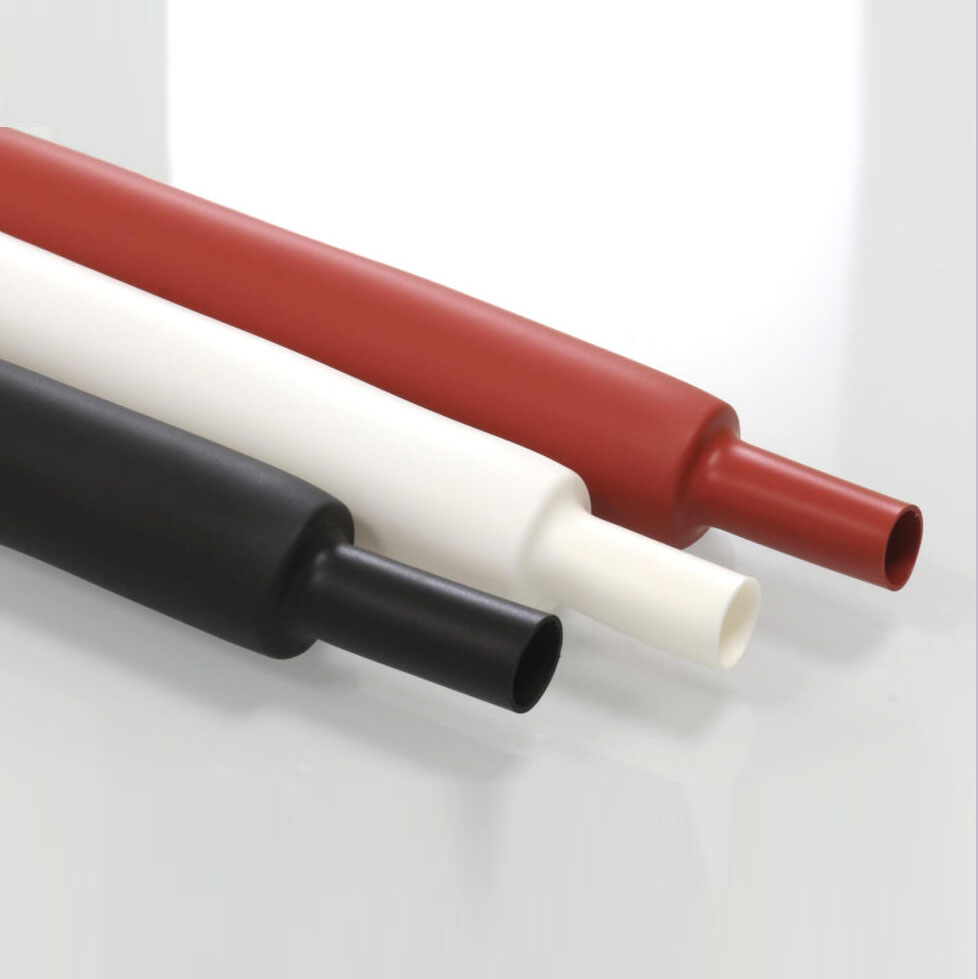 Heat shrink tube (also called heat shrink tubing or heat shrink sleeving) is a thermoplastic tube that shrinks radially when heat is applied, forming a tight, protective sleeve around wires, cables, connectors, and other substrates.
Used across industries from consumer electronics to aerospace and military, heat shrink tube provides insulation, strain relief, mechanical protection, bundling, and environmental sealing in a single, easy-to-install solution.
This guide covers all major heat shrink tube types, materials, shrink ratios, and application categories to help engineers and procurement professionals find the right product for every requirement.
What Is Heat Shrink Tube?
Heat shrink tube is manufactured by extruding a thermoplastic material into a tube and then expanding it radially while hot — locking it in an expanded diameter. When re-heated during installation, the tube returns toward its original smaller diameter, shrinking tightly around whatever is inside it.
Key Performance Parameters
| Parameter | Description | Typical Values |
|---|---|---|
| Shrink Temperature | Minimum temperature to activate shrinkage | 70°C – 260°C |
| Wall Thickness | Supplied / recovered wall thickness | 0.3mm – 2.0mm (typical) |
| Flammability | UL 224 VW-1, UL 94 V-0, Mil-Spec rated | Material dependent |
首页>Products >Heat Shrink tube
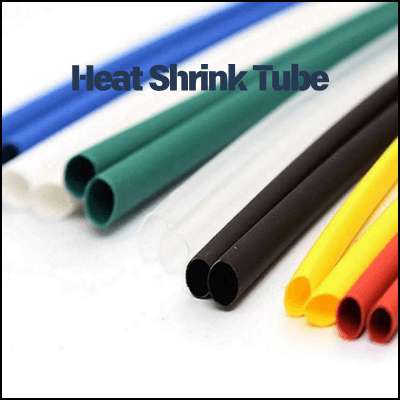 125° Heat Shrink Boots
Polyolefin (Standard)The most widely used heat shrink tube material worldwide.
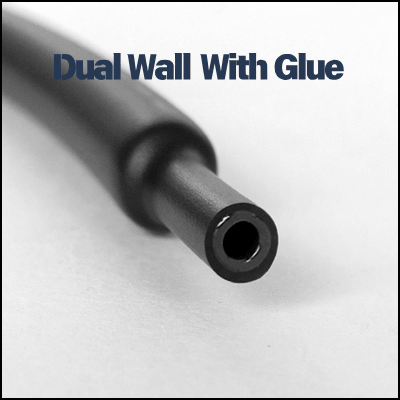 Daul Wall Heat Shrink Tube
Environmental sealing version of polyolefin or PVDF tubing.
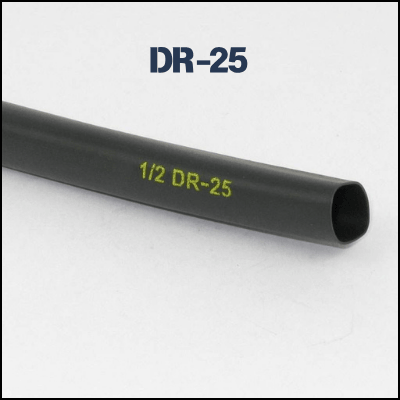 Daul Wall Heat Shrink Tube
High performance Diesel Resistant elastomer tube, suitable for resistance to
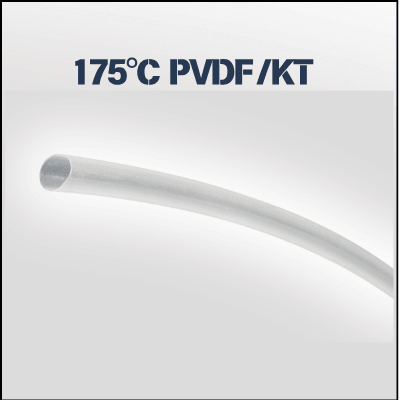 175° KT-PVDF Tube
The preferred choice for aerospace, military, and high-temperature industrial applications.
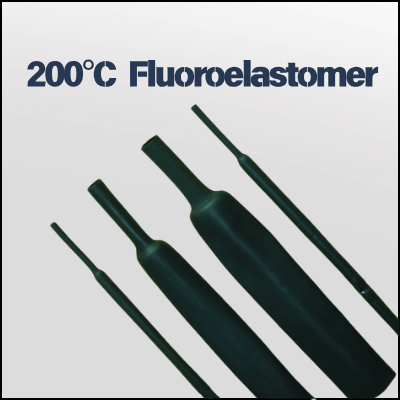 Fluoropolymer (FEP / PFA)
Transparency + chemical resistance combination.
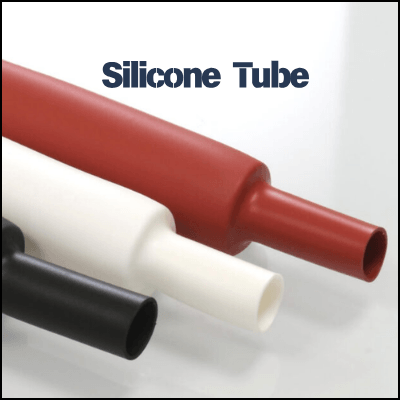 Silicone Heat Shrink Tube
Highest flexibility and vibration resistance.
Heat Shrink Tube Materials: Overview
The single most important specification decision when selecting heat shrink tube is the material. Different materials determine operating temperature range, chemical resistance, flexibility, compliance, and cost.
1. Polyolefin (Standard)
The most widely used heat shrink tube material worldwide.
- Temperature range: -55°C to +135°C
- Shrink ratio: 2:1 standard; 3:1 available
- Flexible, flame-retardant, electrically insulating
- Available in the widest range of colors, diameters, and lengths
- Complies with: UL 224, RoHS, REACH
- Best for: General wiring, automotive, consumer electronics, industrial controls
2. PVDF (Kynar® / Polyvinylidene Fluoride)
The preferred choice for aerospace, military, and high-temperature industrial applications.
- Temperature range: -55°C to +175°C
- Shrink ratio: 2:1
- Excellent chemical resistance (fuels, hydraulic fluids, acids)
- Low smoke emission, flame retardant
- Thinner wall → lighter weight vs. polyolefin at same protection level
- Complies with: MIL-DTL-23053/16, AMS-DTL-23053, UL 224
- Best for: Avionics wiring, military harnesses, motorsport fuel/oil lines, defense electronics
3. PTFE (Teflon®)
Maximum chemical and temperature resistance.
- Temperature range: -65°C to +260°C
- Shrink ratio: approximately 1.3:1 (lower ratio, requires mandrel installation)
- Extremely low friction coefficient
- Near-universal chemical resistance
- Radiation resistant
- Complies with: MIL-DTL-23053/12, UL 224
- Best for: High-temperature engine wiring, chemical processing, laboratory equipment, nuclear environments
4. Elastomer (Rubber / Silicone-based)
Highest flexibility and vibration resistance.
- Temperature range: -75°C to +200°C
- Remains pliable and rubber-like after shrinking
- Excellent vibration damping
- Does not crack at low temperatures
- Best for: Robotics, motorsport, military portable equipment, any application requiring flex after installation
5. Fluoropolymer (FEP / PFA)
Transparency + chemical resistance combination.
- Temperature range: -65°C to +200°C (FEP); up to +260°C (PFA)
- Optically clear or semi-transparent — allows visual inspection
- Very low dielectric constant
- Best for: High-frequency signal cables, sensor wires requiring visual inspection, medical devices
6. Dual-Wall Adhesive-Lined (Polyolefin or PVDF)
Environmental sealing version of polyolefin or PVDF tubing.
- Contains a layer of hot-melt adhesive on the inner surface
- Adhesive flows during shrinking, sealing against moisture, dust, and fluids
- Shrink ratio: 3:1 or 4:1
- Suitable for: IP67/IP68 sealing, marine, outdoor, underbody automotive
- Best for: Any application where moisture ingress protection is required at wire entry/exit points
Material Comparison Quick Reference
| Material | Max Temp | Chem Resistance | Flexibility | Compliance | Relative Cost |
|---|---|---|---|---|---|
| PVDF | 175°C | Excellent | Moderate | MIL-DTL-23053/16 | Medium-High |
| Elastomer | 150°C | Good | Excellent | — | Medium |
| Dual-Wall | 110–175°C | Good–Excellent | Good | UL 224 / MIL-Spec | Medium |
Shrink Ratios Explained
The shrink ratio tells you how much the tube will shrink down from its supplied (expanded) diameter.
- 2:1 — Standard. Supplied ID shrinks to 50% of original. Suitable for most wiring applications.
- 3:1 — Expanded coverage. Useful when the substrate diameter range is wide (dual-wall adhesive types).
- 4:1 — Wide-range coverage. Ideal for irregular shapes, connectors, or large bundles.
- 6:1 — Specialty. Used when the starting diameter is very large compared to the substrate.
Selection rule: The supplied ID should be at least 1.1x the substrate OD, and the recovered ID should be 0.8x–0.95x the substrate OD.
Common Application Categories
| Application | Recommended Material | Key Benefit |
|---|---|---|
| Automotive wiring harness | Polyolefin | Low cost, color coding, UL 224 |
| Aerospace / avionics | PVDF | MIL-spec, low smoke, light weight |
| Marine / outdoor | Dual-wall adhesive | Moisture sealing, corrosion protection |
| Motorsport / racing | Elastomer or PVDF | Heat, fuel/oil resistance, flexibility |
| High-frequency signal cable | FEP | Low dielectric constant, transparency |
| Industrial chemical environments | PTFE | Maximum chemical resistance |
| Military portable equipment | PVDF or elastomer | Temp range, low smoke, flexibility |
For detailed application guidance, see: Heat Shrink Tube Applications Guide
How to Install Heat Shrink Tube
- Cut the tube to the required length (typically 10–20% longer than the area to be covered, to account for axial shrinkage).
- Slide the tube over the substrate before termination where possible.
- Position the tube centered over the area to be protected.
- Apply heat using a heat gun, starting from the center and moving toward the ends to prevent air trapping.
- Verify that the tube has shrunk uniformly and is gripping the substrate fully.For dual-wall adhesive-lined tubes, apply heat slowly to allow adhesive to flow and seal before the outer wall fully sets.
Related Resources
- How to Choose the Right Heat Shrink Tube — Step-by-step selection guide
- Heat Shrink Tube Materials Guide — Detailed material comparison
- Heat Shrink Tube Applications — Industry and use case guide
- Heat Shrink Boots Product Range — Molded boots for connector backshells
Frequently Asked Questions
What is the most common heat shrink tube material?
Polyolefin is the most widely used material due to its low cost, good electrical insulation, flame retardancy, and availability in a wide range of sizes and colors. It is suitable for the majority of general-purpose wiring applications.
What shrink ratio should I choose?
For most wire and cable insulation applications, a 2:1 shrink ratio is sufficient. Choose 3:1 or 4:1 when the substrate diameter varies widely, when covering irregular shapes, or when using dual-wall adhesive-lined tubing.
Can heat shrink tube be used outdoors?
Standard polyolefin tubes provide limited UV and moisture resistance. For outdoor, marine, or underbody automotive use, specify dual-wall adhesive-lined heat shrink for moisture sealing, and select a UV-stabilized grade if long-term sunlight exposure is expected.
What is the difference between heat shrink tube and heat shrink boots?
Heat shrink tube is a straight cylindrical sleeve for covering wire runs. Heat shrink boots are molded three-dimensional shapes (straight, angled, Y-shape, T-shape) designed specifically to cover connector backshells and harness branch points. See: Heat Shrink Tubing vs Heat Shrink Boots
Does heat shrink tube comply with military specifications?
Yes — PVDF heat shrink tube complies with MIL-DTL-23053/16 and AMS-DTL-23053. PTFE grades comply with MIL-DTL-23053/12. Always verify the specific slash sheet and class required for your program.
Reference
首页>Products >Heat Shrink tube
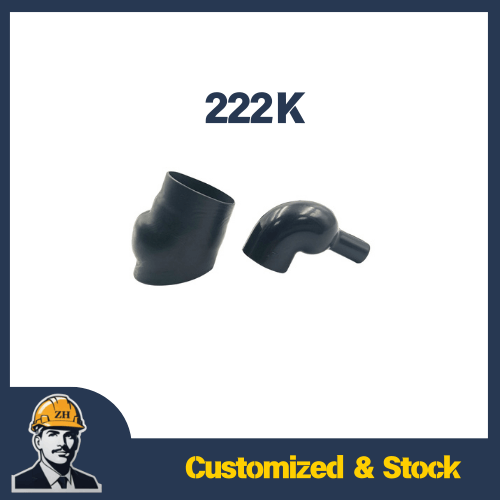 90° Angle Heat Shrink Boots
222D/222K 90 angle shape Heat Shrink Transition for reliable strain relief and cable protection.
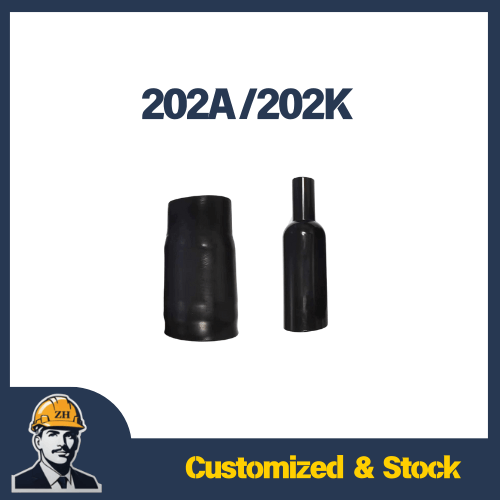 Straight Heat Shrink Boots
202A/202K Straight Heat Shrink Transition for reliable strain relief and cable protection.
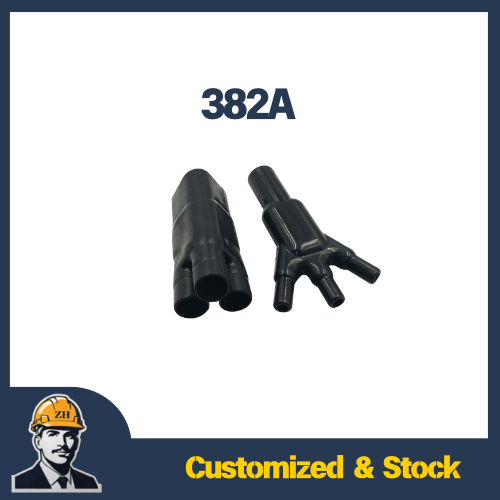 1 to 3 Shape Heat Shrink Boots
462A 1 to 3 shape Heat Shrink Transition for reliable strain relief and cable protection.
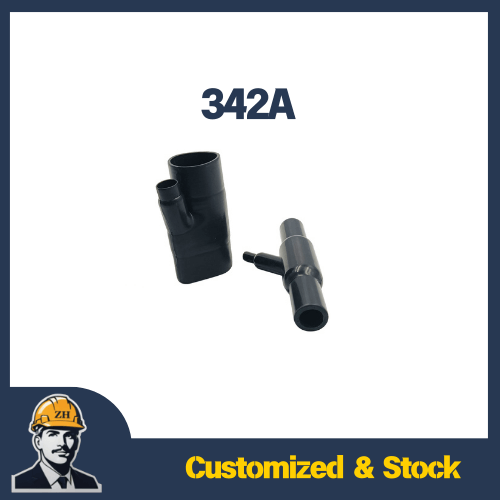
45° Angle Heat Shrink Boots
342A 45 angle shape Heat Shrink Transition for reliable strain relief and cable protection.
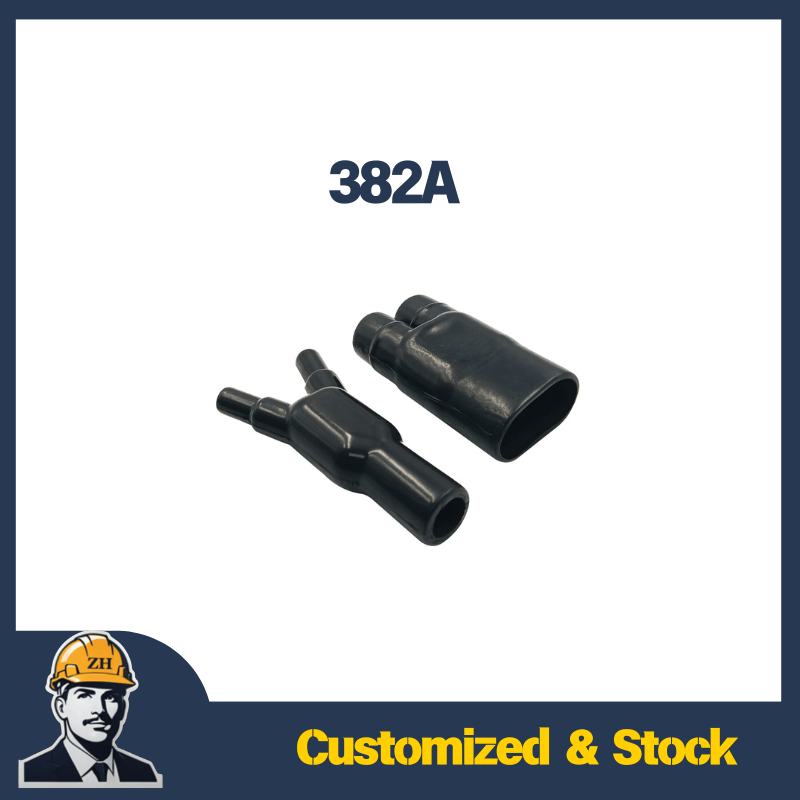
Y Shape Heat Shrink Boots
382A Y shape Heat Shrink Transition for reliable strain relief and cable protection.
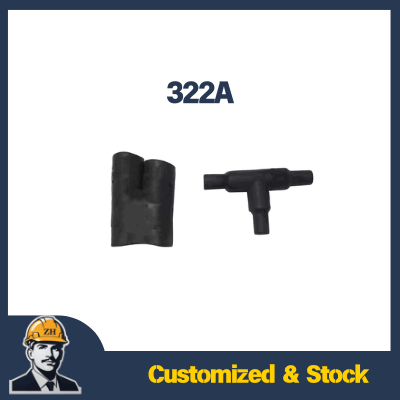
T Shape Heat Shrink Boots
322A T shape Heat Shrink Transition for reliable strain relief and cable protection.

 Chinese
  English